For businesses that sell time
Every sale is a project. Run it like one.
Built on the methods behind the certifications, so you don't need one. Framelock runs each job the way a trained project manager would: approved budget, controlled changes, reported time, an invoice within what was agreed. Nobody on your team needs the training.
Early access, in small batches · Per-seat pricing, published
The problem
Sold is not the same as delivered.
Sales are fine. The leak is everything that happens after the sale, and it's the same four things in every business that sells its people's time.
01
The job never becomes a project.
It's a sale, then it's work, then it's an invoice. Nobody set it up, so nobody is running it.
02
The work drifts from what was sold.
The people doing it never saw the quote. They do what makes sense, not what was priced.
03
Hours go untracked, or tracked too late.
By the time anyone counts them, the overrun has already happened.
04
Changes get absorbed instead of agreed.
The client asks for a bit more. Someone says yes. It never reaches the invoice.
That gap is where the margin goes. Not in the sale. In the running of it.
The method
Five stages. Every job.
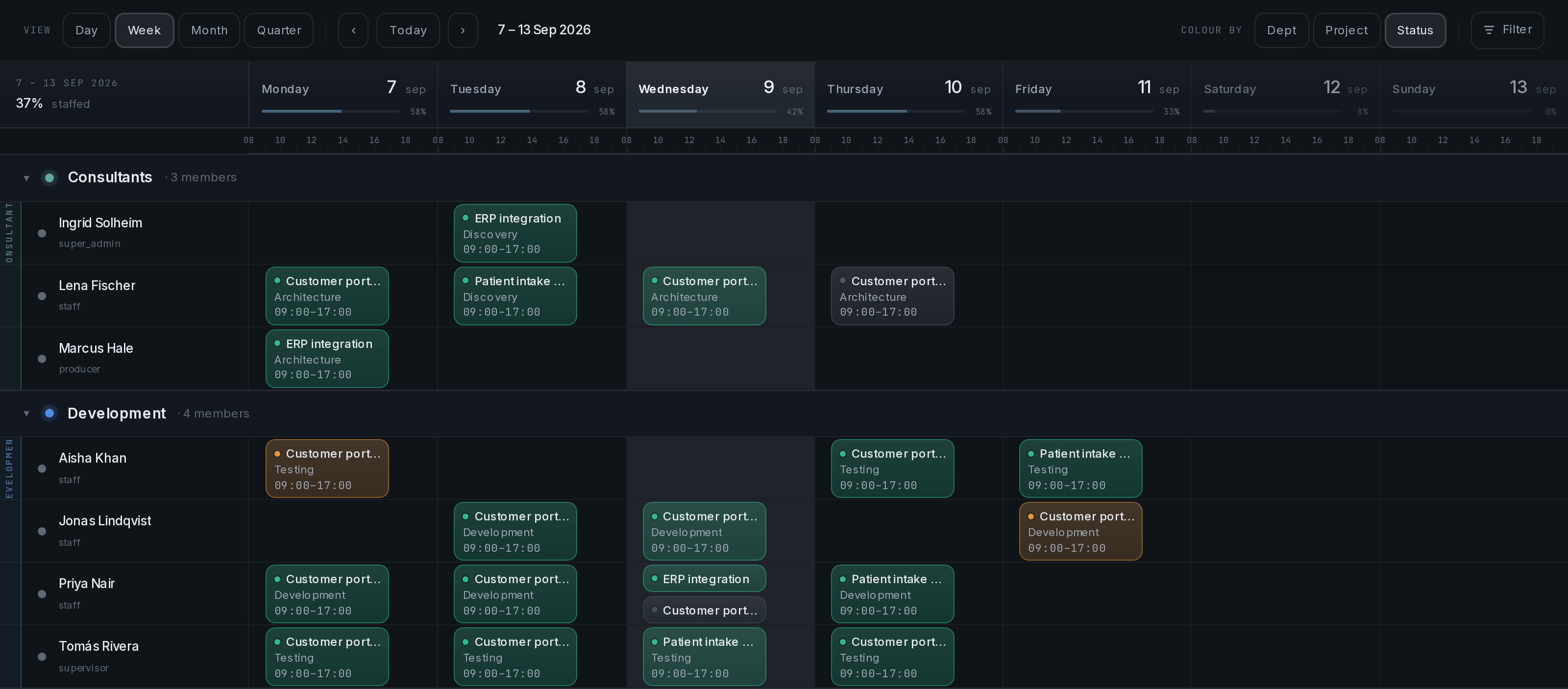
Built on tested and proven project management methods, cut down to what a business that sells time actually needs. Framelock walks every job through the same five stages, whether anyone on the team has read a methodology or not.
- 01SoldThe moment it's agreed, it's a project with a budget the client has approved.
- 02BookedThe right people go on it, and everyone can see what was sold.
- 03DoneHours get reported against what was booked, while it's still cheap to react.
- 04ChangedWhen scope moves, a change order is raised and the client approves it. Nothing gets absorbed.
- 05BilledThe invoice is issued against what was agreed, including every approved change, and never beyond it.
No training course. No forms to remember. The method is in the software.
04 · Changed
When the client asks for more, the software asks them to approve it.
An approved budget in Framelock is a sealed record. It can't be quietly edited. When a line goes over, or the scope changes, Framelock raises a change order and sends it for approval, so every extra hour has a signature behind it before it reaches the invoice.
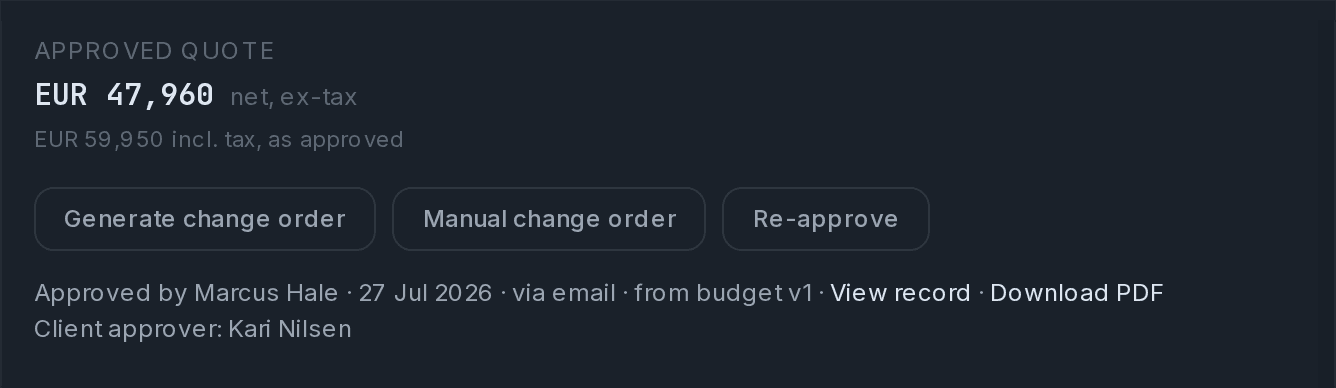
01
Approved.
The client-approved quote: amount, approver, date, version. Sealed.
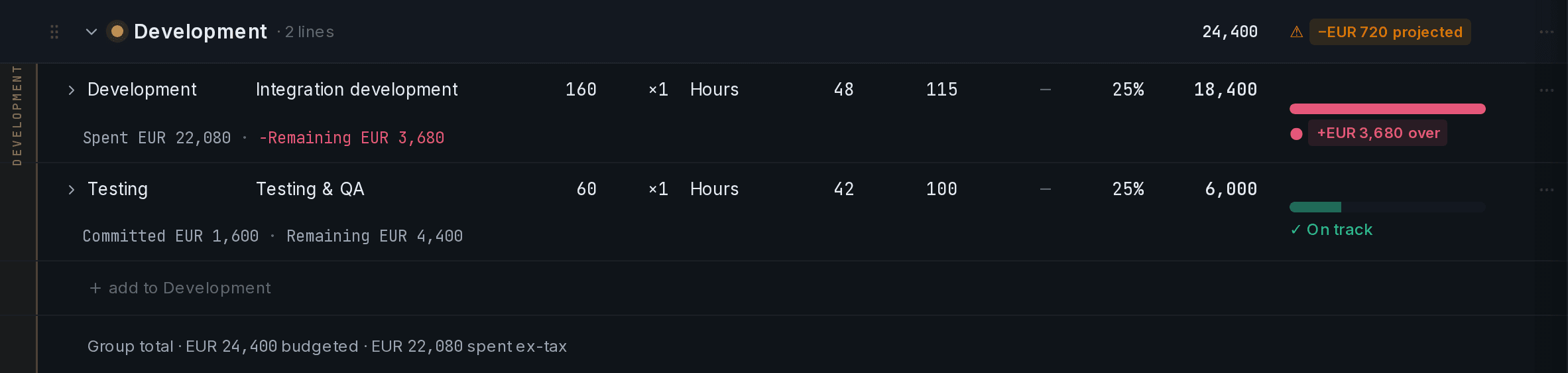
02
Over.
A line goes past its budget. It shows on the line, in red, with the number.
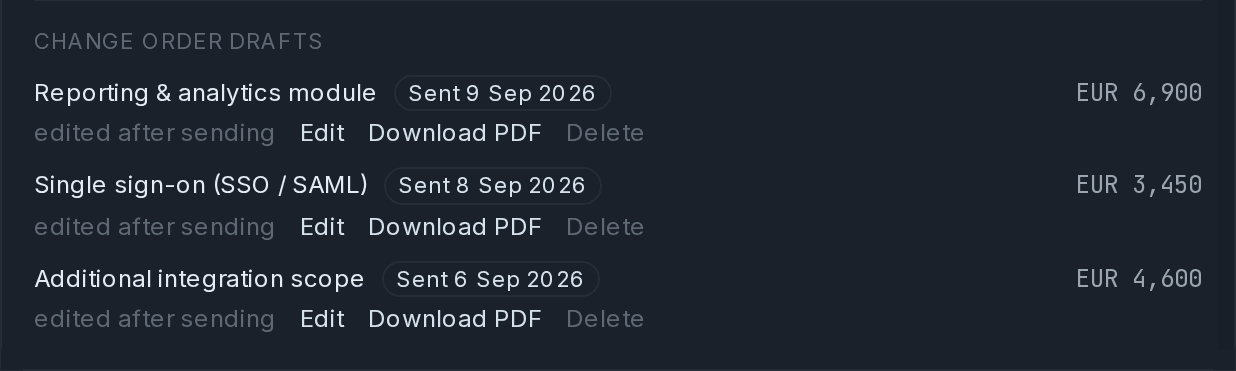
03
Sent for approval.
Generated from the overrun, sent for approval, and added to the ceiling once signed.
Sealed means sealed.
Once approved, a quote can't be changed by anyone, including us. Changes exist only as change orders with their own approval.
Approved by the client, not by memory.
Approvals go by email and are recorded against the budget version they approved. Six months later, you can show exactly what was agreed and when.
02 · 03 · Booked and done
The people doing the work see what was sold.
Bookings come from the project, so the schedule already knows the budget. Time is reported against the booking, so the project already knows the hours. Nobody has to reconcile anything at month end.
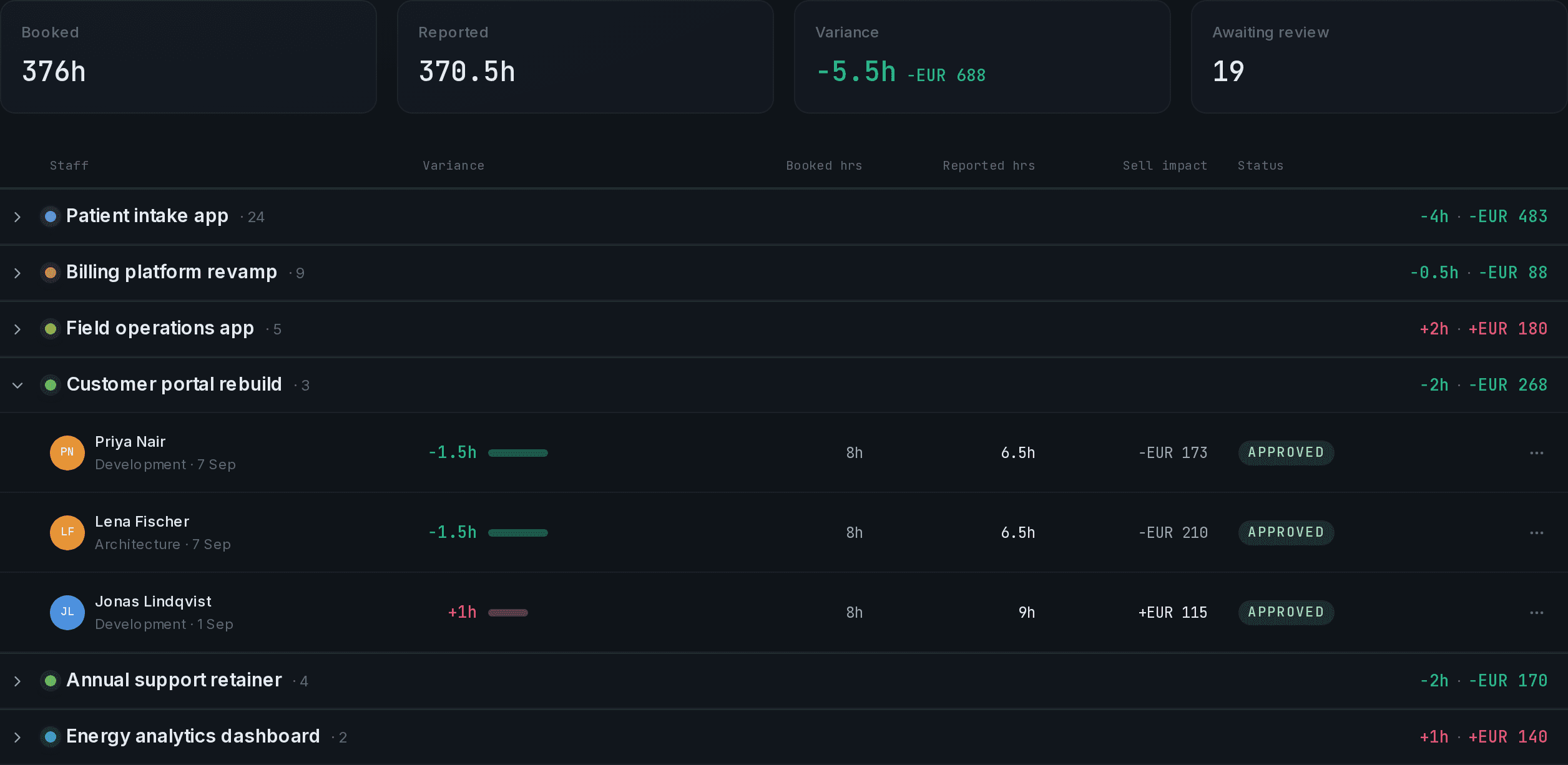
Done. Booked 8h, reported 5.5h, and what that does to the sell price, per person, per day. Approve, send back, or lock the period.
05 · Billed
Invoice what was agreed. Nothing more, nothing missed.
Agreed with client, invoiced to date, remaining under ceiling. The ceiling is the approved quote plus every approved change order, and Framelock won't issue past it.

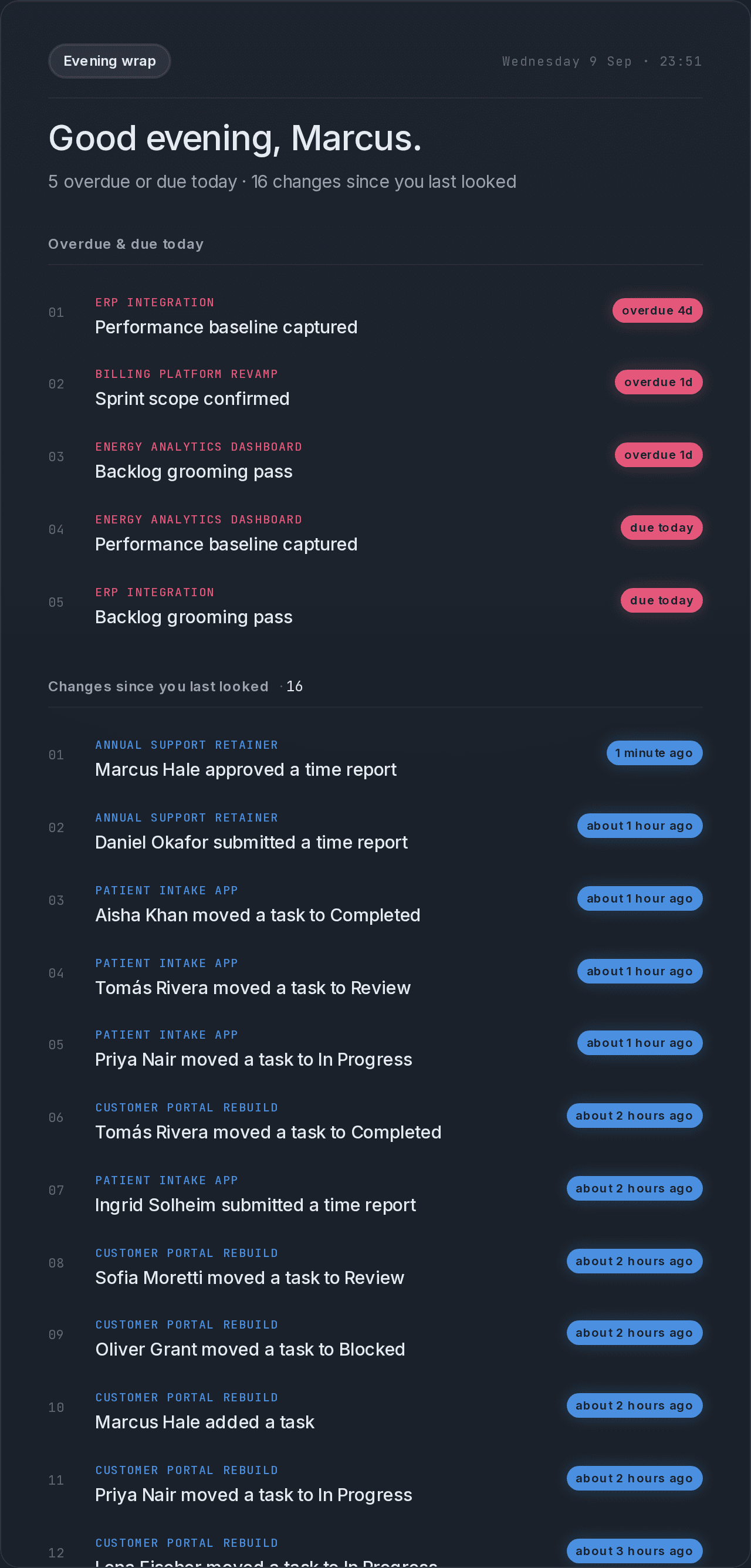
Every evening
Come back and know what changed.
Open Framelock at the end of the day and read, in plain language, what moved: tasks, bookings, approvals, change orders, invoices. No dashboard to decode. Read it, close it, go home.
By role
If you sold it
- You see the approved budget, what's booked against it, and what's been reported, before the overrun rather than after.
- Scope changes come to you as change orders, not as surprises on a timesheet.
- You invoice to the ceiling and can show the client every approval behind it.
If you're doing it
- Your week is on one screen, with what was sold sitting right there.
- Confirming your hours takes seconds. Adjusting them takes a minute.
- If something needs more time than was quoted, you say so, and it becomes a change order instead of unpaid work.
Your industry
Same method. Your vocabulary.
Framelock doesn't come with someone else's departments. You define the teams, the activities and the rates. The stages underneath stay the same.
Studios and agencies
Edit, colour, design, motion. Quotes that get renegotiated mid-project, now with a paper trail.
Consultancies and IT services
Consultants on client accounts. What was sold is what gets delivered, and the extras get billed.
Trades and field service
Crews on jobs. Quoted work, hours on site, change orders when the job grows.
Pricing
Per seat. Published. No sales call.
Two seat types, both prices below. You are not buying modules. Everything the method needs is in both.
Full seat
EUR 39per person, per month
For the people running the work. Budgets and approvals, the schedule, change orders, time review, invoices.
Staff seat
EUR 15per person, per month
For the people doing the work. Their calendar, their tasks, their hours.
- No setup fee and no onboarding package
- No minimum team size
- Pay for ten months, get twelve
- Prices ex VAT
Larger team, or something that does not fit two seat types? Write to hello@framelock.app and we will work it out.

Why it exists
Built by someone who ran the projects.
William Schaad ran post production for over a decade: hundreds of jobs, each one sold, staffed, changed and billed. The ones that ran well shared a shape. A budget the client had agreed and everyone could see. Changes agreed before the work moved. Hours recorded while they were fresh. An invoice that matched what was promised.
That shape is a method, and it is not new. What it never had was software that made it the easiest way to work. Framelock is that software. The method is built in, so running a job properly is not something your team learns. It is what the tool does.